
| Home |

Read about our cycling trip around Australia in our book - "Ants, Dust & Flies in my Coffee..."
Or
Triking Alaska's
Dalton Highway
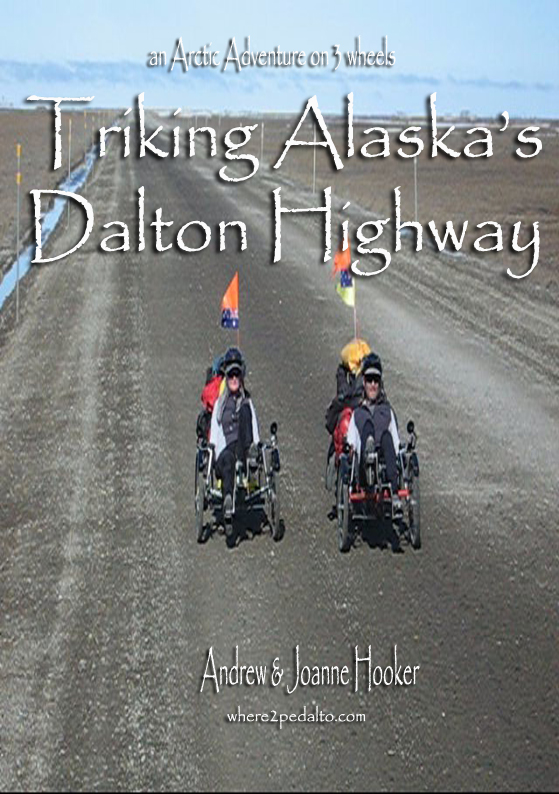
Our Latest Book in
E-Book Format
Size - 27Mgb
(requires Adobe Acrobat Reader)
September 2016
01-09 September 2016
September brings the activation of some decisions. Having replenished our piggy bank somewhat, we will finish up here in Surat on Friday the 9th and then begin the journey to Western Australia to catch up with our family and friends before starting the grain harvest in WA.
10-11 September 2016
We left Surat this morning and after nine weeks residency at the caravan park the grass patch underneath our home was quite long and stood out as we left.
It was kind of strange but exciting to be back on the road and it is that feeling that we never seem to tire of. Getting used to having the house on the back again after so long was a short learning curve and before long we were in St George for some shopping and to fill up with fuel.
Shopping over we then made our way to the small locality of Hebel where we enquired about the dirt road that would take us to Brewarrina, but the recent rains meant that the news was all bad - the road is closed. So, we decided to stop for the night in the small but comfortable caravan park behind the general store. Ralph directed us in to a site that was not water logged and we settled in for the rest of the day. By the time we went to bed there were eight rigs in for the night.
We slept well despite the yahoo's who took over the street outside of the pub making a bit of a racket until the early hours when they ran out of puff and either left or fell asleep where they were. We woke early and after a nice hot shower in the facilities were the first rig out of the gate. Listening to Macca on the radio as we made our way along the road that looked like it was running through a canola crop, the similar type plants with their bright yellow flowers and pungent smell lined the road and often spread off into the bush and paddocks as far as the eye could see.
Passing Lightning Ridge and the slow holiday makers that had just started their day, we were glad to be in front of them and making our own pace rather than being restricted by them. Walgett was a stop for fuel and then morning tea at the free camp on the South end of town before we headed back into town and turned off towards Brewarrina.
On the outskirts of Brewarrina we crossed the Barwon River and after spying two caravans all set up on the bank of the river near the boat ramp we turned in, selecting a spot and settling in for the rest of the day. A short walk along the river and across the old road bridge and then down to the boat ramp was not only some exercise but a photographic reccy mission.

The old road bridge across the Barwon River (c 1888) just a couple of hundred metres from our camp.
The old Bridge was designed by Public Works Dept engineer Percy Allen and is the furthest upstream of four similar bridges built across the Barwon. Its lift span, when it was active allowed paddle steamers and barges loaded with wool to pass underneath. It acts now as a reminder to the past and as a foot bridge.
12 September 2016
Our camp by the river was very peaceful last night and despite our proximity to the road bridge, nothing woke us throughout the night and we awoke to a birdsong alarm clock. Yesterday morning we have woke around 5am and this morning was the same. Refreshed from our slumber and excited about being back on the road again we left camp early and headed out onto the highway.
Heading through Brewarrina as it started it's day we made our way to Bourke, the lush green countryside making the journey pleasant to view as the kilometres ticked over. The masses of yellow canola like plants of yesterday replaced by swathes of purple patterson's curse and small yellow and white daisies carpeted the ground off into the trees.
We had noticed that there was still a lot of water lying around which meant that our plan of following the Darling River from Bourke to Wilcannia might be a problem. Stopping for a chat with the local Police confirmed our thoughts as we were told that the road was closed to all but light traffic, so it was more bitumen for us.
Heading down the highway to Cobar the daisies stood out nicely against the dark, wet red soil of the area and courtesy of lush pastures everywhere only the occasional wild goat was seen along the roadside. Male Emu and their young charges were around though and we passed three Dad's and their chicks, but it was a group of around 20 Emu's all together in a bunch that was the sight of the day.
We stopped in Cobar long enough for morning tea and fuel and then headed on some more. The roads have taken a bit of a battering recently and dodging rough patches and potholes was the norm. Plenty of other travellers around meant the waving hand got a work out as we continued on under fluffy white clouds in a nice blue sky.
Passing a number of rest area's where the ground was quite mushy we eventually climbed the McCulloch's Range and with nobody else in yet had time to select the best camp spot at the rest area before the others started to arrive. A snooze to get rid of the driving haze was taken while Joanne went for a walk in the bush looking for Orchids, returning with two small scratches on her head from the angry resident magpie.
13 September 2016
Left our nice quiet camp on the top of McCulloch's Range and began our days drive, and after about 50 km's we stopped for a look at the Darling River in Wilcannia. The last time we saw this river is was not flowing downstream and very low upstream of the town, but after good rain is is considerably higher now and flowing quite nicely.
Leaving Wilcannia we were back into goat and salt bush country for some time, the trip only broken by overtaking some slow caravans and then the winding road just before we arrived in Broken Hill. Making our way to the shopping centre for some supplies and fuel before heading back out onto the highway and into strong wind and rain, before crossing into South Australia at the town of Cockburn.
Flat open countryside helped the wind give us a battering. Passing the gravel pit where we camped the last time through here we thought of how windy a night there would be even if we were behind the gravel piles. Further on we stopped for a look at the free camp opposite the pub at Olary but decided that it too was a tad too exposed to the weather and so continued on, next stop Manna Hill.
Manna Hill has a small donation camp and toilets next to the Hotel come Museum but as it was still reasonably early and the weather still not abating we continued on and eventually arrived at Yunta (from where to took the road North to Arkaroola the last time we were here).
We topped up our fuel and after finding out that the servo's only powered site had been booked earlier that day, made our way over to and settled into the free camp between the railway and the highway. Low clouds draping themselves across the surrounding hills made for a nice picture, but not one we were unfortunately able to capture, though once the rain (and the clouds) cleared the camera came out and for some shots of the area.
Later on a goods train came in and stopped opposite us making way for the Indian Pacific to come thundering through, Yunta being just a blink and you will miss it as it made its way from Perth to Sydney.

With clouds and weather like that it was no wonder the Indian Pacific was in a hurry.
14 September 2016
Five other caravans and motorhome's (and two blokes on the ground in their swags) were in with us last night, and we awoke this morning to a better looking day but still a windy one. We had enjoyed a peaceful sleep despite the fact that the two service stations near us were popular truck stops and the railway was just a stones throw on the other side, neither of us remembering a train coming through throughout the night.
Up early again we got ready and were the first to hit the highway, and straight into the teeth of a strong head/side wind. Heavy clouds over head and off in the distance covered the hills as we made our way to Peterborough. From Peterborough it was open grain growing country and then hills as we passed through Orrorroo and then into Wilmington.

Heading to Peterborough
Climbing out of Wilmington and then descending through Horrocks Pass (which one day we will get some good photo's of) and with views of the top of the Spencer Gulf we hit the main highway. Negotiating traffic, traffic lights, speed and red light camera's and all the trappings of a built up area we arrived in Port Augusta for some food shopping and more fuel before heading out of the hustle and bustle as quick as we could.
Passing the El-alamein Army camp and WWII training area we turned right at the giant water tanks following the sign which read "Western Australia" More open country and wind to contend with we passed the small town of Iron Knob with it's ever expanding Iron Ore mine which supplies Arrium Steel in Whyalla with raw product and then a short while later saw the large wheat silos' denoting our stop for the day at Kimba.
Pulling into the donation camp at the sports and recreation centre we found that it had changed since we were last here, and changed for the better. A large gravel area among some trees had been created to take the pressure off of what was just the football club carpark but still near to the toilets and $1 for 2 minutes hot shower. With four others in we selected a spot and set up camp, enjoyed a late lunch and then a hot shower in the most excellent shower block.
15 September 2016
Plenty of other campers came in to the Kimba camp last night, and what a cold night it was. Certainly the coldest we have had in a week or so. We were the third to leave this morning and before we left town we went up to the lookout to view the surrounding area and to see the statue's in honour of Eyre and his aboriginal guide Wylie.

Eyre and Wylie
The wind at the top of the lookout was quite brisk and we were happy to leave the view and get back into the warmth of the car and to head off.
Passing through plenty of green but short crops we also made our way through the small rural communities and towns until we reached Minnipa where we have camped before at the nearby granite rocks and stone hut. After not filling our water tanks at Kimba we also found that the tap at the Concrete Crappa had been altered and was no longer able to take a hose, so we went over to the sports oval and dump point and used the separate fresh water tap there instead.
Before long we were in Ceduna and after filling up with fuel at a cheaper rate than across the Nullarbor, enjoyed hot chips and dim sims for lunch before heading off again.
Arriving in the windmill town of Penong we made our way over to the Windmill park where a local group had retrieved, restored and erected old windmills from all over the place and turned it into a tourist attraction, especially the large windmill they call Bruce, claimed to be Australia's largest windmill, and it certainly is big.

Windmill Park

Information on Bruce (the Comet Windmill in the photo above)
Leaving the windmills behind we made our way to the Cohen Rest Area just 26 km's out of town and while someone was thinking about where they were going to park removed one of their options and settled in.
16 September 2016
Left our spot in the Cohen Rest Area and made our way to Nundroo for a fuel top up to make use of the cheaper prices before we hit the Nullarbor, and to make sure we stuck to our fuel plan.
Passing through the Yalata Aboriginal Lands was a constant change up and down in gears as the hills and or wind, which sometimes conspired together to challenge us, made for more than the usual concentration for driving this part of the journey.
Coming out of the Yalata Lands and onto the Nullarbor itself was where the wind really made the going tougher courtesy of nothing to block us from it. Passing the Head of the Bight Whale Sanctuary we noticed the sign said that there were zero whales to be seen and so, a few kilometres on we stopped at the Nullarbor roadhouse for morning tea and to chat with them about the condition of the road up to Koonalda Station and the Old Eyre Highway from there on.

Nullarbor Roadhouse, Motel and their latest attraction, the Old Nullarbor Roadhouse.

The latest attraction at Nullarbor.
The staff at Nullarbor told us "no problems" getting to Koonalda because Border Village has had all the rain. Wait a minute, Koonalda is closer to Border Village! So we rang Border Village to ask them and they said "no problems" because Nullarbor has had all the rain! So, with both sides agreeing the road would be "no problems", and neither knowing that they had had all the rain, we set off on a little side trip to explore the now abandoned Koonalda Station and part of the Eyre Highway that was moved closer to the coast so that tourists could enjoy the coastline and the Bunda Cliffs. Of course the skeptic in me says they did it to justify making that part of the coast a National Park...but that's just me. Either way they have done us a favour by providing a great coastal drive, some great camp spots on the coast and, an inland adventure on the old highway.
Pulling out of the roadhouse we thought about following the Old Eyre Highway from Nullarbor itself, but eventually decided to stick to the plan we had made for this side trip and so remained on the bitumen for about 90 km's before turning off the highway to Koonalda.
Stopping to air down the tyres was a good move as the track up to Koonalda starts as a very bumpy, hard limestone track that had the potential to rip a hard inflated tyre open and even at a slowish pace of 30km/h with softer tyres was interesting. Then, just as we were settling into a 15 km trip at 20-30km/h after 4.5km's the track turned into a dirt/sand surface for the remaining 10km's, which made the going quicker not to mention much easier on vehicles, and passengers.
Driving along the track between the salt bushes we caught glimpses of an old fenceline and then as we approached the Old Eyre Highway caught our first look at Koonalda Station Homestead. Koonalda was last lived in by the Gurney family who leased the station from 1939 to 1988. It is now abandoned and part of the Nullarbor National Park.
Pulling up at the front gate we were the only people there and so took full advantage of having the place to ourselves by getting the photos we wanted, exploring inside the homestead, investigating the huge stock of old cars that now make up the rusting Koonalda Motor Museum, and inspecting the old roadhouse and shearer's quarters.

The homestead with it's railway sleeper walls and fences from the railway near Cook.
The windows and doors were recycled from the old telegraph station at Eucla.

Stepping inside the front door we were surprised at the condition of the building, and you could still smell the world of yesteryear.
Most of the rooms were empty with the exception of an old wardrobe or other shelving, but walls, ceilings and floorboards are all still in tact. It seems that the National Park it sits in and the people that visit have been kind to this old place.

The heart of the home.

The bathroom.

The Koonalda Roadhouse and Generator Room that would have seen many a traveler
until the highway was moved closer to the coast in the late 1970's.

Part of the rustic vehicle collection from vehicles that broke down crossing the Nullarbor.
Heading North again we made our way past the old shearing shed and pens then through a varying terrain and vegetation for about 5km's until we came to a criss cross of dirt tracks. Taking the most used track we came to the top of a small hill and there below us was the Koonalda Cave. A check of the map later showed that the other track kept going and meets the Trans Australia Railway at Hughes (abandoned).

Koonalda Cave sits at the bottom of a hill that is actually steeper than it looks.

Koonalda Cave itself. Water from this cave was pumped out for use at the homestead and for watering stock.

The smell of sheep has not left this place at all.
Back at the homestead we enjoyed a look at the old shearing shed and then lunch before deciding not to camp, preferring instead to make a start on the Old Eyre Highway before the rain that was expected to hit arrived.
Back at the junction where the track up to Koonalda crosses the Old Eyre Highway we looked left and we looked right, but it all looked the same, so we turned right and headed off to explore the real Nullarbor Highway.

Part of the Old Highway.
What was once a main arterial highway across Australia this part is now just two wheel tracks through the grass. The full width of the highway can be seen for most of the way, though with small traffic loads all using the same side these days the width is slowly being reduced by grassland and bush for much of the trip.
A number of inviting tracks lead off from the main track and we decided to take one to see if we could find another cave. Following the two wheel tracks through the grass we came to and passed a small grave and then blowhole or well, deciding that we would inspect them on the return journey. Not far past the blowhole the track ran out and we came to an old metal water tank, concrete trough and remains of a bush fenceline that are the Albala-Karoo Bore.
Back tracking to the fenced off hole in the ground and we found that there was exceptionally cold air flowing out of it. So cold it was like standing in front of an air conditioner next to an open window on a hot day, one second the air was hot and then it was chilly. The Nullarbor plain is a limestone plain and there is a labyrinth of caves, passages and blowholes underneath it, some of which start at the Bunda Cliffs, so we surmised that the cold air could have started at the coast and then made its way underneath the plain, cooling as it went until it is forced out at this spot as a natural climate control option.

What must have started off as a natural feature the blowhole looks like it has had some human assistance into it's current form.

The small lonely grave of Herman Johnson (10 Dec 1889)
Back on the old highway we were took some other tracks to see what was there, the answer being nothing, before continuing on along the old highway, eventually stopping for the day just 1.2km from Border Village and the Quarantine Checkpoint into Western Australia.

With no traffic expected and as the weather began to close in we just found a spot and stopped, camping on the Eastbound side of the old highway.
17 September 2016
The wind didn't let up at all last night and it was quite chilly, the sound of rain on the roof made us thankful that we had rocky ground underneath us and not some of that boggy stuff we had passed over earlier.
We packed up and after airing the tyres up to bitumen pressures made our way up to the new highway and emerged at Border Village. Stopping for the complete inspection of our vehicles for quarantine contraband we crossed into Western Australia with no hitches crossed the 12 km's to Eucla and descended the escarpment onto the Roe Plain, the effects of the open ground beginning the fight against the wind as soon as we came through the cutting. The wind was coming directly off the sea and we could see plenty of white caps on the ocean as we descended.
Our fuel plan for our side trip and onwards was working fine so it was not worth stopping at our usual fuel stop at Mundrabilla, but we did pull into Madura where we topped up the tank ($1.64c/l) before climbing the pass and finding a nice camp down the track away from the road, away from the usual camping spot at the lookout, and more importantly out of the wind.
18 September 2016
Our camp at Madura was great and despite some people going past around 3am we had a peaceful sleep. Heading off along the highway after a coolish start we were enjoying the sun and clear weather with almost no wind.
Passing the roadhouse at Cocklebiddy we turned into a gravel rest area just 10km's from the roadhouse and aired down for the 10 km trip across the landscape to the Cocklebiddy Cave.
Joanne went for a wander while the tyres were being deflated and found a small geocache in a small pyramid under a bush. Instructions inside said to take a small item and replace it with something of your own, make a note in the small visitors book and then notify the geocache people on their website. We chose not to take an item or put one in but left our name and the date in the book and then continued on our way.
The track to the cave was mainly limestone with plenty of sharp rocks and bumps to dodge as we made our way along the track through the grassland of the area. After 10km's we could see a large hole in the ground and despite the no camping sign, people with their camp set up above the cave.

The cave as you approach from the parking area.

The very interesting sign that explains the cave that stretches for over 6 kilometres.

Down at the entrance to the cave.

The Cocklebiddy Cave facing North East.
Heading back to the highway after our visit we spotted a small brown snake crossing in front of us and he sat in the long grass just long enough for us to see him for a few seconds.
Back at the highway we aired up again and enjoyed a cuppa and a couple of bickies before heading off down the highway once again. Passing Caiguna we eventually arrived at the Baxter Rest Area. With the whole place to ourselves we found a nice spot and set up camp for the rest of the day.
19 September 2016
Ten of us were camped in the rest area last night and we awoke to a windy day with cloud and rain on the way. The highway has been fairly quiet apart from the usual parade of interstate trucks, and this morning was no different.
The bush is looking good courtesy of recent rains and we enjoyed the trees and panoramas of salt bush interspersed among them. Passing many other rest areas and spots reminded us of camps along here on both of our cycle trips across the Nullarbor and that helped to pass the time. Ballodonia Roadhouse was busy with just a couple of caravans in the camping area as we passed, climbing up and down the terrain as we edged ever closer to Norseman.
Arriving at the Jimberlana Hill Rest area we turned in and found it to be empty, so selected a nice spot near the table, set up and called travel for the day over just as a rain squall came upon us. Then as the sun came out we decided to climb the hill for a look and some photos, something we have been meaning to do for some time.

Our spot at the base of Jimberlana Hill.
Halfway up the hill another rain squall bore down on us requiring us to take shelter behind some bushes for a few minutes while it passed. THe track to the top is not that well defined but we were thankful that someone had left a trail of little yellow pieces of plastic tape tied to bushes for us to follow, and before long we were at the top, the wind trying its best to blow us off. Not to be deterred we took some photos and enjoyed seeing the rain squalls pass to the North and South of us before we descended to our warm home, arriving just as another rain squall hit.

The view towards Norseman. Our home just a little white dot below.

Looking back to where we had come from as a rain squall hits the salt lake.
Tomorrow will see us in Norseman proper where we will get fuel, some fresh veggies and checking with the tourist information centre about the condition of the dirt road to Hyden.
20 September 2016
Two backpacker station wagons came in last night and thankfully, or courtesy of the weather, there was none of the usual opening and closing of car doors every 5 seconds to retrieve yet another piece of something they want and the most we got was this morning when one turned the ignition key on to warm the inside up before they got up.
With the place to ourselves we got up and prepared for the day before driving the 10km's into Norseman just before the place came alive for the day. Two camels in a trailer parked outside the supermarket made for an interesting sight and then with fuel and food onboard we crossed the salt lake and began our trip across the Granite and Woodlands Way to Hyden.
The dirt was like a pool table and very easy to drive on, so good we made our way along at 80-90km/h with cruise control on and just taking in the scenery. Stopping at Lake Johnston for morning tea and then onto The Breakaways for a look at where we camped once when cycling through here on our way to Melbourne.
The last time we were here there was no formality to the place and you could go or camp almost anywhere you like, but now the place has changed to a drive through following the kopper log bollard lined track. There has been much restoration work done here and small plastic bags protecting newly planted native plants litter the place making it look terrible, the end result however should make it worth the current eyesore.

There used to be a table in this little alcove where we camped whilst cycling across here to Norseman.

Joanne described this as a shark with its jaws on the right and it;s workings underneath.

More of the Breakaways.
Leaving The Breakaways we continued through the once fire ravaged landscape, new growth gradually catching up to and taking over the dead wood that was once a prominent feature through these parts. Plenty of Grevillia plants growing here in the sandy soil, their spikey flowers making for a nice show it yellow, orange, white and pink.
Crossing the Vermin Proof fence into the open cropping land we took a detour around Hyden and eventually found ourselves at Anderson Rock, a large granite rock similar to many around these parts. The picnic/camp area wasn't much and after negotiating a turn around by jack knifing we made our way back out and continued on.
We investigated the CBH Wheat Bin at Mt Walker for a camp spot, then Hidden Hollow some 6 km up the road, but that was too small so made our way to Roe Dam where there is a small, sloping camp area with fire pits and even flushing toilets. The camp area sits at the base of another large granite rock and not far from a large dam wall that holds in the water that is falls on the rock and is channeled to it.
Pulling into the camp area we found one caravan there and after selecting a spot and setting up met John and Marilyn from Perth. Happy hour around the fire turned into happy evening until around 10pm when we decided that the day had been long enough.
21 September 2016
Waking to a cool morning after such a quiet night we packed up, said good bye to John and Marilyn and headed off along more good dirt roads. We were getting a good view of the crops through these parts and they are all looking exceptionally healthy courtesy of good rain.
More and more dirt roads and more and more crops of green wheat, oats and chick pea mixed with the bright yellow of canola and yellow daisies in paddocks that were being spelled this season, all making for a pleasant sight as we drove.
Arriving in Bruce Rock we filled up with fuel and then went to the CBH Bin where we will be working again for this years harvest. Taking advantage of the weighbridge we weighed our rig and found we were 300kg under (thankfully) our maximum legal limit. We then spoke with some men who were installing a new conveyor belt out the back to the two large open bulkheads, before going back into town and enjoyed morning tea on the service road in the main street.
Ardath was our first small town after Bruce Rock and after driving past the pub and a few houses made our way back out and on towards Corrigin for lunch.
Bullyee CBH Bin was our next stop as we hoped to surprise our friend Kim and his son Glen who were supposed to be building an open bulkhead there, but the surprise was on us as we were a day early and they were not there. So after almost camping there anyway we decided to continue on along more dirt roads through more crops, passing through Popanyinning then onto Pumphreys Bridge for today's camp.
Expecting to be on our own we were surprised again to find five campers down on the river side of the place and a ground of nine up the back on the old football/cricket oval. We stopped to survey the place to see if we could get ourselves a good camp which turned out to be directly in front of us close to the bridge but right on the waters edge in beautifully warm sunshine. A number of others came in just as we were setting up so we were lucky to get our spot on the water.
Happy hour was with two other couples (Bob and Marg from NSW and Jeff and Kay from Perth) as we all enjoyed the bush TV as it began to keep us warm after the sun had departed for the day.

Our Camp
22 September 2016
Our camp at Pumphreys Bridge was another good one and we awoke to a cool morning and some mist on the river, and that was the best reason to get out of a warm bed.

The old Pumphreys Bridge
Photos and breakfast over we headed off through more bright yellow canola as far as the eye could see before heading through the hills and down onto the coastal strip, arriving at our son Michael's place before lunch and in the rain.
So, now we are here after our 4,000km cross country we will take some time to catch up with family, get the ute and house serviced before heading off to Bruce Rock for the 2016 grain harvest in October.
Mark Twain once said "...years from now you will be more disappointed by the things you didn't do that by the things you did do. So throw off the bowlines. Sail away from the safe harbour. Catch the trade winds in your sails. Explore. Dream. Discover." - and so we will.
|©Andrew & Joanne Hooker | Default Screen Size 1024x768||Last Updated |